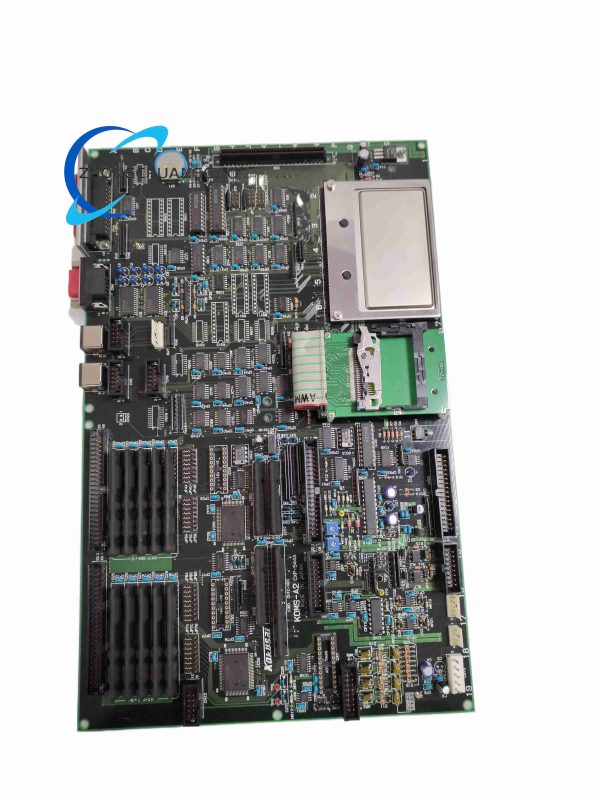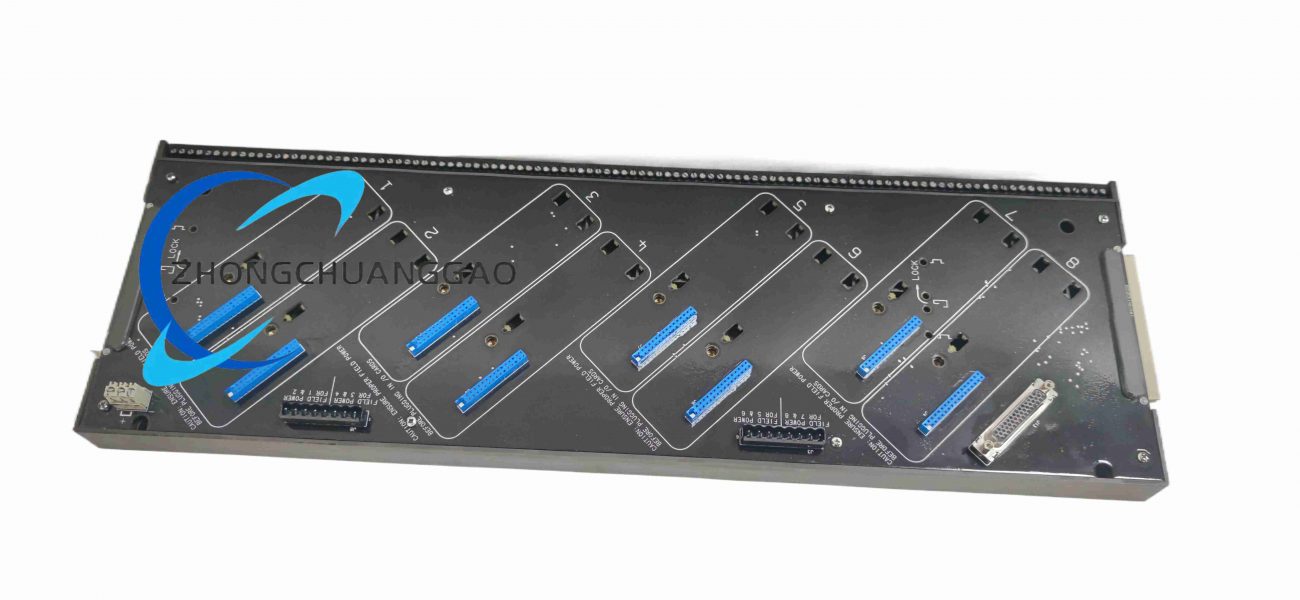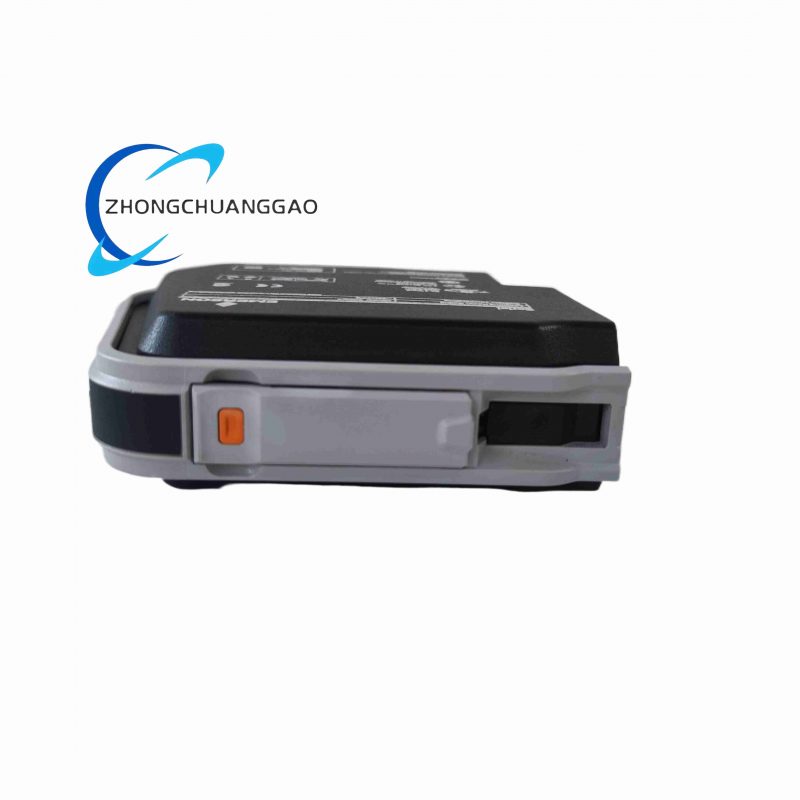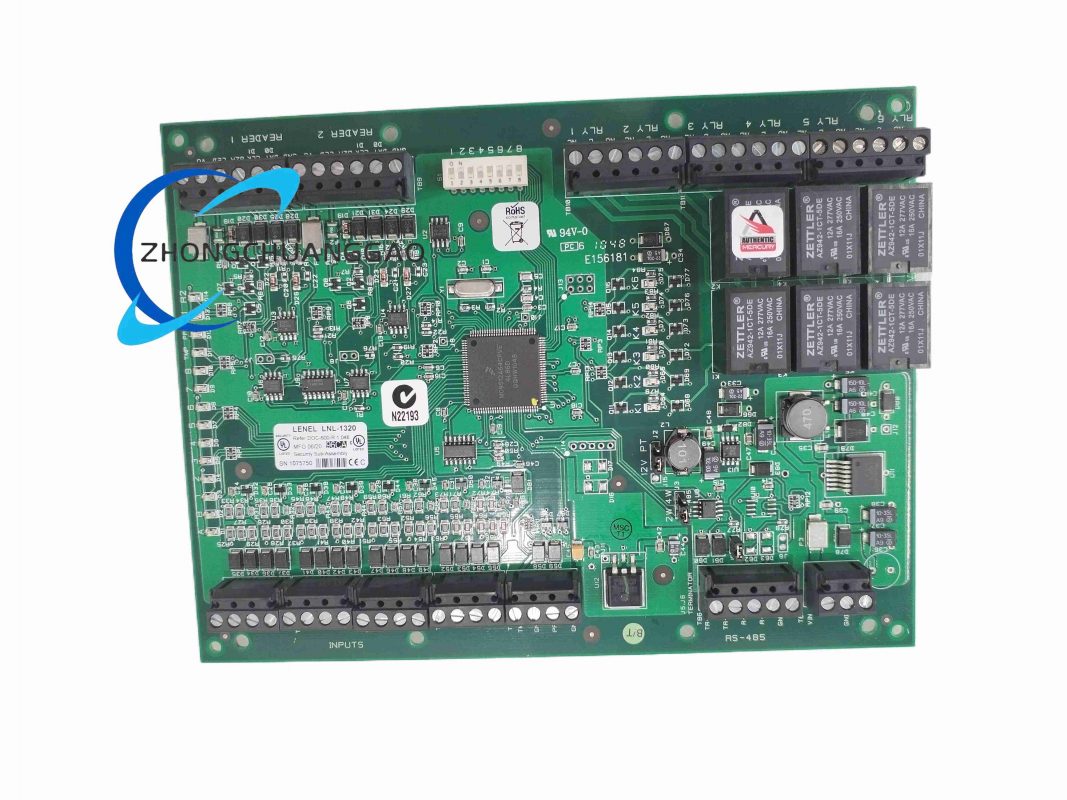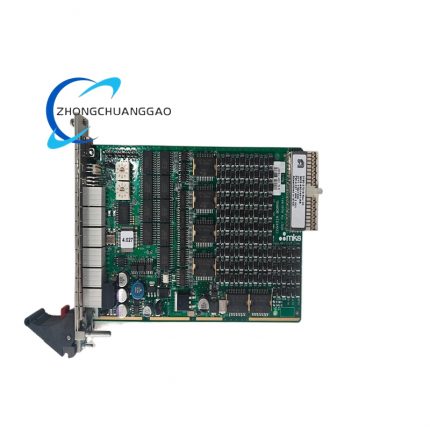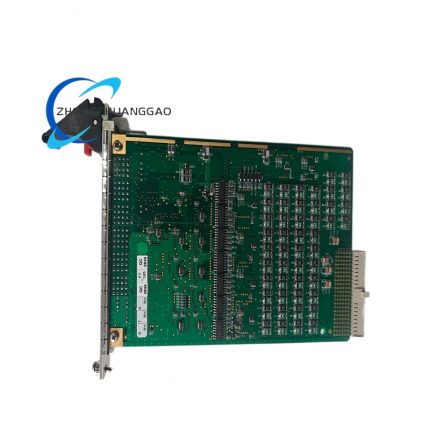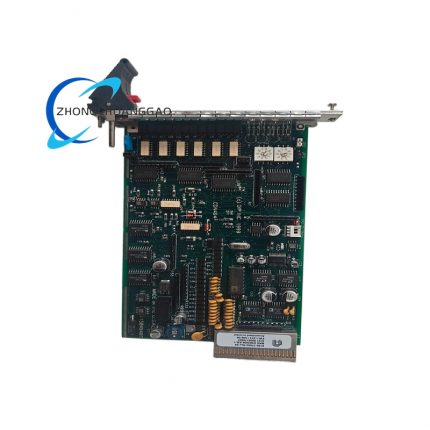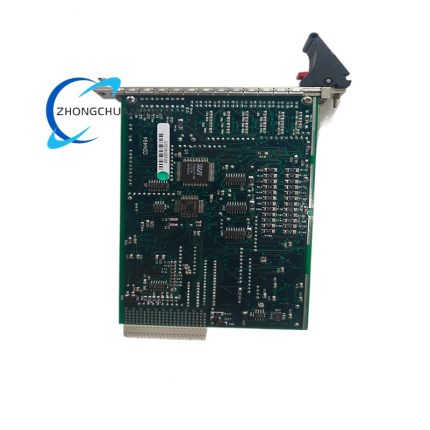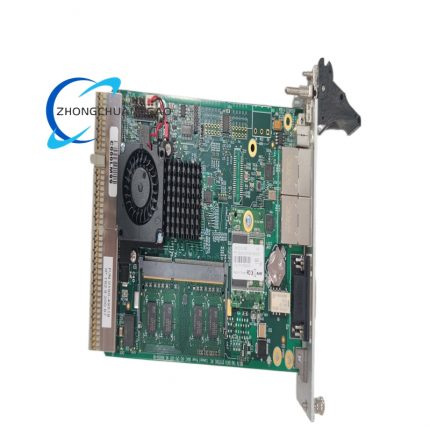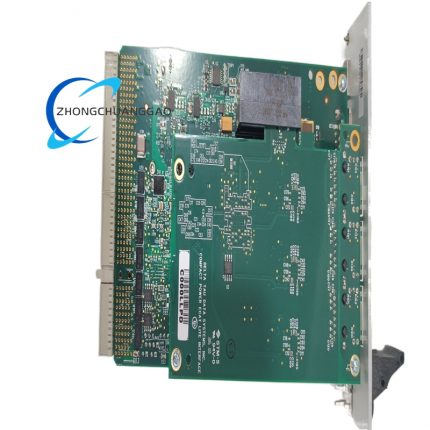

Woodward 8237-1369 ProTech-GII Overspeed Protection Device
Key Features
- Dual Power Input Flexibility: Supports HV (115/240 Vac, 125 Vdc) and LV (24 Vdc) power sources, adapting to diverse site electrical configurations.
- Independent Trip Relays: Three independent Form - C relays enable custom alarm/trip mapping without voting logic, simplifying integration with existing shutdown systems.
- Sulfur - Resistant Design: Conformal coating protects internal components from H₂S/SO₂ corrosion, extending service life in petrochemical and offshore applications.
- Automatic Overspeed Testing: Performs routine overspeed tests without turbine shutdown, validating system functionality while minimizing operational downtime.
- MPU Integrity Checks: Continuously verifies magnetic pickup connections and signal quality, triggering alarms for faulty sensors before speed monitoring errors occur.
- Modbus Integration: RS485 - based Modbus RTU enables remote monitoring, data logging, and parameter adjustment via SCADA systems.
- Real - Time Speed Readout: 4 - 20 mA analog output provides proportional speed data for operator visualization and control system integration.
- Panel - Mount Convenience: Compact form factor fits standard control cabinets, with front - panel keypad/display for local configuration.
Woodward 8200-1302 505D Digital Governor Turbine Control
Key Features
- Integrated Graphical HMI: 8.4‑inch color display enables real‑time trending, alarm visualization, and intuitive navigation; multilingual support simplifies global operation.
- Marine & Hazardous Compliance: ATEX Zone 2 and IACS UR E10 ratings allow deployment in offshore platforms, LNG carriers, and commercial marine vessels.
- Auto‑Start Sequencing: Configurable hot/cold start routines with temperature input integration to optimize start‑up time and turbine stress.
- Redundant Speed Sensing: Dual speed channels validate input integrity; zero‑speed detection and peak speed indication for overspeed trip confirmation.
- Critical Speed Avoidance: 3 programmable speed bands to bypass resonant frequencies and prevent turbine damage during acceleration/deceleration.
- Advanced Load Control: Remote droop, frequency dead‑band, and slip‑frequency synchronization for grid/load matching and stable parallel operation.
- Event Logging & Diagnostics: Real‑time clock (RTC)‑stamped trip/alarm logs; self‑diagnostics for I/O, speed sensors, and communication faults.
- Hot‑Swappable Configuration: Parameter changes and firmware updates via HMI or RemoteView without system shutdown.
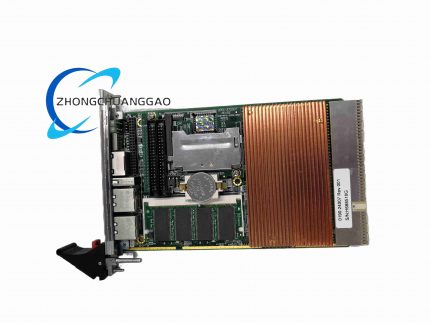
Woodward 5466-1035 MicroNet Plus CPU5200 Processor Module
Key Features
- Dual - Mode Operation: Runs in simplex for cost - effective small - scale systems or redundant mode for high - availability critical applications, with automatic failover in redundant setups.
- Integrated Data Storage: 64 MB flash memory retains firmware, application code, and event logs during power loss; 128 MB RAM enables fast program execution and real - time control loops.
- Real - Time Monitoring: The real - time clock timestamps all events (alarms, trips, mode changes) for post - incident analysis and compliance reporting.
- Hot - Swappable Redundancy: In redundant mode, the standby CPU automatically takes over within milliseconds if the primary CPU fails, with no process interruption.
- VMEbus Compatibility: The on - board FPGA provides VMEbus master/slave functionality to interface with all MicroNet I/O modules (discrete, analog, speed, temperature).
- Secure Configuration: The service port uses password - protected access to prevent unauthorized changes to control logic and parameters.
- Firmware Upgradability: Flash memory supports in - field firmware updates via the service port or Ethernet for feature enhancements and bug fixes.
- Hazardous Area Rating: CSA Class 1, Division 2 certification allows deployment in petrochemical, offshore, and other hazardous industrial environments.
Woodward 5437-1119 ProTech‑GII Redundant Spare Module
Key Features
- Plug‑and‑Play Redundancy: Fully pre‑configured to match host system parameters; no re‑programming needed for hot swap. Automatically synchronizes speed data, trip setpoints, and alarm logic with primary modules.
- TMR Voting Logic Compatibility: Integrates into 2‑out‑of‑3 voting architecture to avoid false trips and ensure trip reliability if a primary module fails.
- On‑Line Maintainability: Hot‑swappable design allows replacement while the turbine is running, eliminating safety system downtime during module failure.
- Shared System Status: Exchanges real‑time speed, trip latch, and alarm status with all modules (A/B/C) for consistent monitoring and event logging.
- MPU & Speed Fault Handling: Supports MPU open‑wire/loss‑of‑speed detection and speed difference alarms to validate sensor health during operation.
- Event Logging & Diagnostics: Equipped with a real‑time clock for time‑stamped trip/alarm logs; synchronizes with other modules for consistent time‑averaging and post‑incident analysis.
- Sulfur‑Resistant Coating: Uses a conformal coating to protect against H₂S/SO₂ gases (IEC 721‑3‑3 Class 3C2), suitable for petrochemical/offshore environments.
Woodward 9907-149 ProTech 203 De-energize-to-Trip Electronic Overspeed Protection System
Key Features
- Triple - Channel Redundancy: Three fully independent speed - sensing units, each with its own power supply, MPU interface, and trip relay, ensuring no single - point failure disables protection.
- 2 - out - of - 3 Voting Logic: Trip relay activation requires agreement from at least two units, balancing safety and avoiding false trips from a single faulty unit.
- De - energize - to - Trip Safety: Default safety configuration where power loss triggers the trip relay, minimizing risk of failed trip during power outages.
- On - line Maintainability: Modular design allows hot - swapping of a single failed unit without shutting down the prime mover, reducing downtime.
- Real - time Monitoring & Diagnostics: Front - panel LCDs display speed from each MPU, the highest speed reading, and system status; LEDs indicate power, MPU health, and trip conditions.
- Configurable Protection Parameters: Programmable overspeed setpoints, MPU fault timeouts, MPU fault setpoints, and gear tooth counts to match specific machinery requirements.
- On - line Testing Capability: Supports overspeed test mode without triggering actual turbine trips, enabling verification of system functionality during operation.
Woodward 8200-1302 505D Digital Governor Turbine Control
Key Features
- Integrated Graphical HMI: The 8.4 - inch LCD screen supports multi - language display, real - time parameter trending, and configurable tag names for easy navigation and troubleshooting. It can record RTC - time - stamped trip/alarm events.
- Comprehensive Turbine Control: It has automatic start sequencing for hot/cold starts (with temperature input support), critical speed avoidance across 3 speed bands, dual speed/load dynamics tuning, zero - speed detection, and overspeed trip peak - speed indication. It also features frequency dead - band and remote droop adjustment.
- Safety & Monitoring: It is equipped with 10 external alarm inputs and 10 external DI trip inputs, and has a dedicated trip indication with time - stamping for post - event analysis. It also has built - in overspeed protection and a fault - tolerant architecture.
- Flexible I/O Configuration: 8 analog inputs (configurable for 27 functions), 20 contact inputs, 2 analog outputs, and 8 Form - C relays allow for customized integration with sensors, actuators, and safety systems.
- Communication & Diagnostics: It supports Modbus for PLC/DCS integration, and has data logging and RemoteView remote monitoring capabilities. It offers 3 operating modes: configuration, operation, and calibration.
- Hazardous Area & Marine Ready: It meets ATEX Zone 2 and IACS UR E10 marine compliance standards, making it suitable for harsh and classified environments.
ICS Triplex T8231 Trusted 750W 24Vdc Power Pack
Technical Specifications
-
Electrical Specifications
- Power Rating: 750W continuous output (24Vdc main output)
- Input Voltage: 110/240Vac (auto-switching, 47–63Hz)
- Input Current: 7.5A (110Vac), 3.75A (240Vac) (full load)
- Output Voltages: 24Vdc ±0.5V (main, regulated); 28Vdc ±1V (adjustable field power)
- Output Current: 31.25A (24Vdc, max); 26.8A (28Vdc, max)
- Power Factor Correction: ≥0.95 (at full load)
- Ripple & Noise: ≤50mV peak-to-peak (24Vdc output)
- Current Sharing: Active current sharing (±5% load balance across redundant modules)
- Protection Features: Overvoltage (27Vdc threshold), overcurrent (35A threshold), overtemperature (85°C threshold), short-circuit protection (auto-recovery)
ICS Triplex T8471 Trusted TMR 120Vdc 32-Channel Digital Output Module
Technical Specifications
-
Electrical & Signal Specifications
- Output Configuration: 32 independent TMR channels (each with triple drivers, voters, and monitors)
- Output Voltage: 120Vdc (nominal field supply; 96–144Vdc operating range)
- Output Current: 1.0A continuous per channel (2.0A peak for 10ms)
- Isolation: 2500Vrms impulse withstand (channel-to-backplane, channel-to-channel; IEC 61010-1)
- Backplane Power: 5Vdc from Trusted chassis (max 2.5A per module)
- Overcurrent Protection: Solid-state current limiting (per channel; trips at 1.2A ±5%; auto-reset after fault clearance)
- Fault Detection: Open circuit, short-to-bus, short-to-ground (per channel; reported to controller via backplane)
- Response Time: ≤10ms (channel on/off; including voting and diagnostics)
ICS Triplex TC-505-02-4M5 4.5-Meter Trusted I/O SmartSlot Cable
Technical Specifications
-
Electrical & Signal Specifications
- Cable Type: 34-core shielded multi-conductor (24 AWG stranded copper)
- Voltage Rating: 300 V AC/DC (continuous operation)
- Current Rating: 2 A per conductor (max load)
- Insulation Resistance: ≥100 MΩ (at 500 V DC)
- Shielding: Foil + braid dual shielding (shielding effectiveness ≥90 dB at 100 kHz–1 GHz)
- Impedance: 120 ohms (signal pairs)
- Capacitance: ≤25 pF per meter (conductor-to-conductor)
- Attenuation: ≤1 dB per meter at 1 MHz
- Signal Isolation: 2500 Vrms (module-to-FTA, 1 minute)
ICS Triplex TC-304-01-5M0 Trusted 5-Meter Maintenance & Diagnostic Cable
Technical Specifications
-
Electrical & Signal Specifications
- Cable Type: 6-core shielded twisted-pair (Belden 9536 equivalent)
- Wire Gauge: 24 AWG (stranded copper conductors for flexibility)
- Impedance: 100 ohms (matched for RS232 signal integrity)
- Voltage Rating: 300 V AC/DC (continuous operation)
- Current Rating: 1 A per conductor (max)
- Insulation Resistance: ≥100 MΩ (at 500 V DC)
- Capacitance: 20 pF per meter (conductor-to-conductor)
- Attenuation: ≤1 dB per meter at 1 MHz
- Shielding Effectiveness: ≥90 dB (at 100 kHz to 1 GHz)
- Communication Protocol: RS232 (asynchronous serial, up to 115.2 kbps).
ICS Triplex TC‑303‑02‑4M0 4‑Meter Trusted Local Expansion Fiber Optic Cable
Technical Specifications
-
Optical Specifications
- Fiber Type: 62.5/125 μm duplex multimode (OM1)
- Core/Cladding Diameter: 62.5 μm core, 125 μm cladding
- Numerical Aperture (NA): 0.275
- Attenuation: ≤3.5 dB/km at 850 nm; ≤1.5 dB/km at 1300 nm
- Insertion Loss: ≤0.3 dB per LC connector (typical: 0.2 dB)
- Return Loss: ≥35 dB (typical: 40 dB)
- Bandwidth: 160 MHz·km at 850 nm; 500 MHz·km at 1300 nm
- Operating Wavelength: 850 nm / 1300 nm (dual‑window compatibility)
-
Electrical & Mechanical Specifications
- Connector Type: LC/LC keyed industrial fiber optic connectors (dust‑cap protected)
- Jacket Material: LSZH (Low Smoke Zero Halogen)
- Strain Relief: Molded black polyurethane strain relief at both ends
- Cable Diameter: 5 mm (0.2 inches)
- Minimum Bend Radius: 25 mm (dynamic); 15 mm (static)
- Tensile Strength: 100 N (22.5 lbf) for short‑term installation; 50 N (11.2 lbf) for long‑term operation
- Length: 4 meters (13.1 feet) ± 0.1 meters (factory‑calibrated)
- Weight: 0.25 kg (0.55 lbs)
ICS Triplex TB8110B Trusted TMR Processor Module
Technical Specifications
-
Processor & Memory
- Processor Clock: 100 MHz RISC (reduced instruction set computing) core
- DRAM: 16 MB EDO with 60 ns access time for real‑time data processing
- EPROM: 512 KB for bootloader and firmware storage
- Flash Memory: 2 MB for application program and OS kernel storage
- NVRAM: 128 KB for maintained variable storage (retained during power loss)
- Variable Storage Allocation: 1 byte per discrete, 4 bytes per analog, 5 bytes per timer
- SOE Buffer: 1000 local events, transfers to CI module buffer (4000 events total)
-
Electrical Specifications
- Power Input: 20–32 VDC (redundant power inputs for fault tolerance)
- Power Consumption: 80 W (heat dissipation: 80 W typical)
- Power Protection: Reverse polarity protection, overvoltage clamping, and current limiting
- I/O Interface: Triple redundant Inter‑Module Bus (IMB) for I/O module communication
- Communication Ports: 2x RS422/485 (2/4‑wire), 1x RS485 (2‑wire), IRIG‑B 002 time sync input