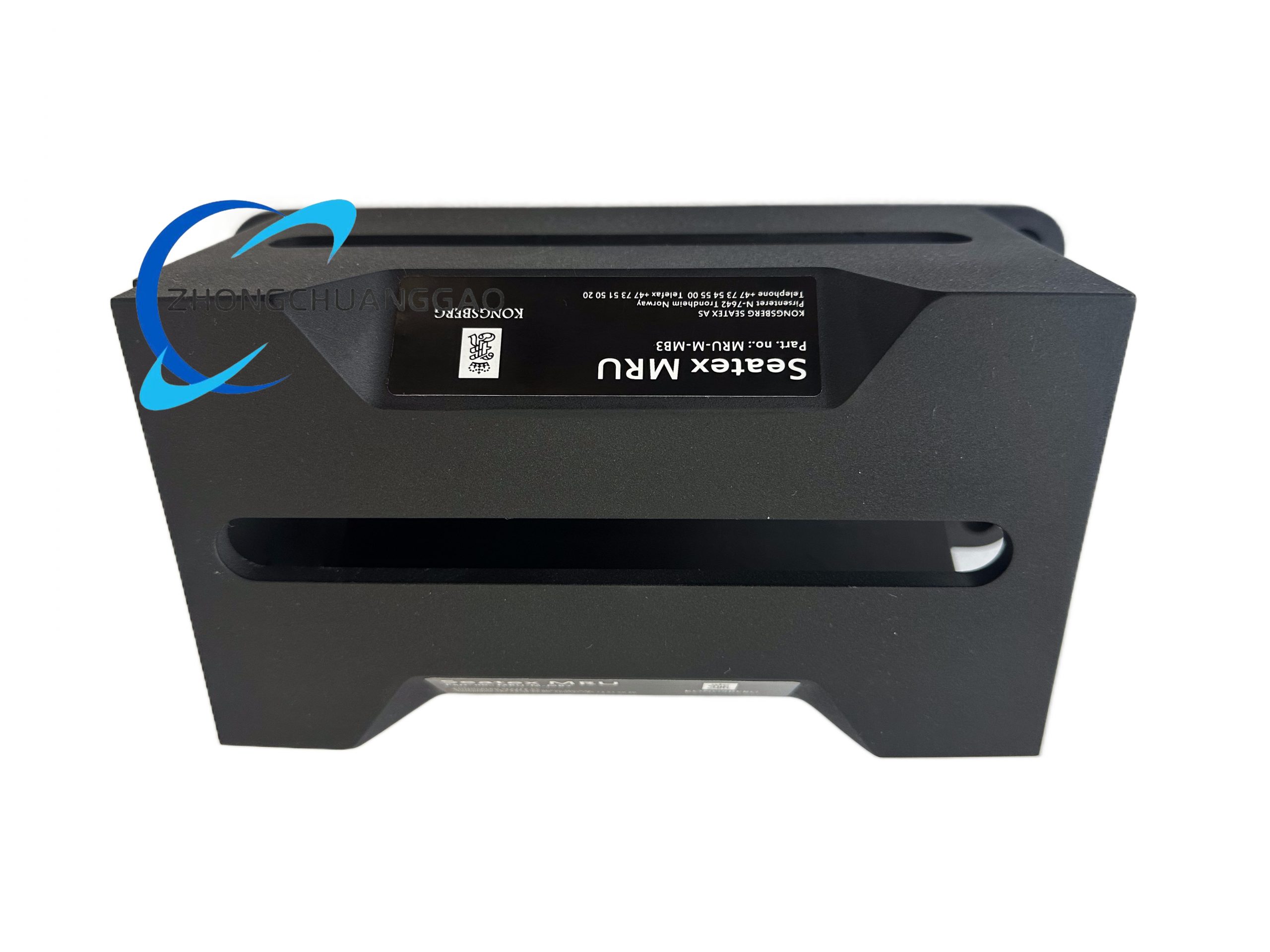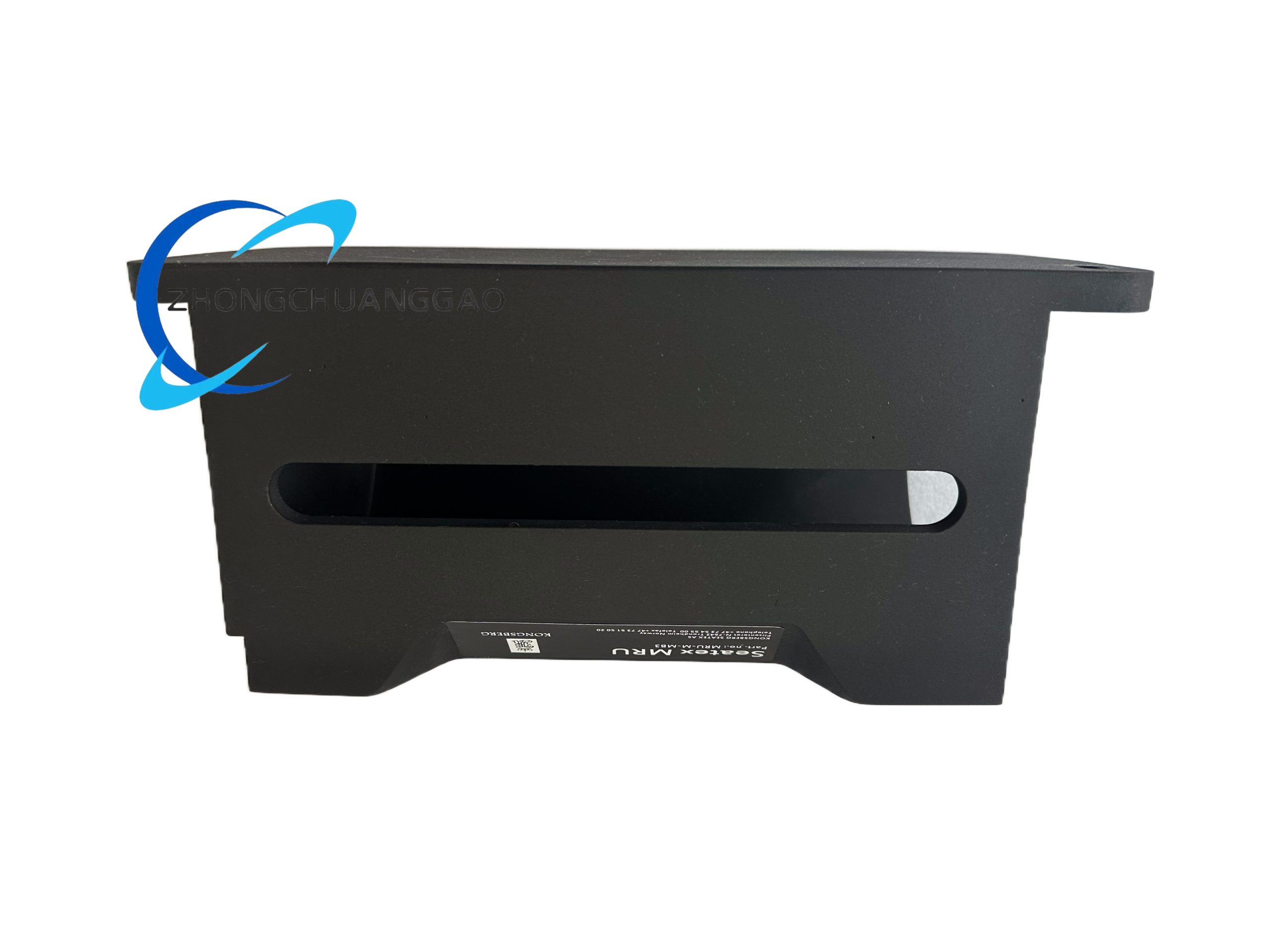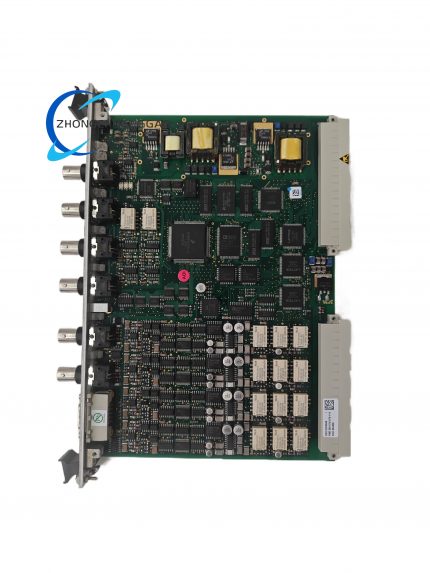

KONGSBERG MRU-M-MB3

Product Brief:​ High-precision solid-state Motion Reference Unit providing real-time six degrees of freedom (roll, pitch, yaw, heave, surge, sway) and linear accelerations. Designed for marine dynamic positioning, crane heave compensation, ROV/AUV navigation aiding, antenna stabilization, and wave monitoring. Uses MEMS inertial sensors with Kalman-filter sensor fusion; optionally aided by external GNSS/DVL for enhanced heave accuracy.

Category:
Description
Working Principle:​ Tri-axis MEMS gyroscopes and accelerometers continuously sample motion; onboard Kalman filter estimates attitude and heave by fusing accelerometer gravity vector (low-frequency) with gyro integration (higher-frequency) and removing bias/drift; optionally accepts GNSS or DVL aiding data to improve heave and velocity accuracy.
Sensor Technology:​ MEMS gyros + MEMS accelerometers + magnetometer; optional dual-antenna GNSS input for true heading aiding
Attitude Accuracy (Roll / Pitch):
  • Static (RMS): ≤ 0.05° – 0.08°​ (typical, depending on model year/firmware)
  • Dynamic: ≤ 0.10° – 0.15°​ (1σ, sea state dependent)
    Heading (Yaw) Accuracy:​ With magnetic aiding 1°–2° RMS; with GNSS dual-antenna aiding ≤ 0.1° RMS​ (model/option dependent)
    Heave Accuracy:
  • Real-time heave: ±5 cm or 5 % of wave height​ (whichever larger)
  • Delayed (post-processed / smoothed): ±2 cm or 2 %
    Heave / Data Update Rate:​ Up to 200 Hz​ (typical 10 / 25 / 50 / 100 Hz selectable)
    Angular Rate Range (Gyro):​ ±300 °/s typical
    Accelerometer Range:​ ±2 g to ±8 g (model dependent)
    Supply Voltage:9 V DC – 36 V DC​ (typical 12/24 V DC marine supply)
    Power Consumption:< 3 W​ typical
    Interfaces / Output Formats:
  • RS-232 / RS-422​ (serial ASCII/NMEA/Kongsberg binary)
  • Ethernet (TCP/UDP)​ on some firmware versions
  • Optional CAN / Synchro output on specific variants
    Mounting Orientation:​ Any orientation (software alignment offsets configurable via “lever arm” and “orientation matrix”)
    Enclosure / Protection:​ Sealed aluminum housing, IP67​ (some variants IP68), resistant to salt spray per IEC 60945/ DNV GL type approval
    Operating Temperature:–25 °C to +70 °C
    Storage Temperature:–40 °C to +85 °C
    Weight:≈ 0.5–1.0 kg​ (dependent on cabling/housing option)
    Certifications:​ IEC 60945, DNV GL approved for marine use; meets IMO MSC.192(79) performance standards for heading/attitude devices where applicable
    Applicable Industries / Applications:​ DP1–DP3 dynamically positioned vessels, offshore crane heave compensation, seismic survey vessels, ROV/AUV inertial navigation aiding, wind farm installation vessel motion compensation, coastal radar platform stabilization, wave buoys
    Installation Requirements:​ Mount on rigid, vibration-isolated surface with minimal flex; align physical axes to vessel axes and enter lever-arm offsets (X/Y/Z distance from MRU to vessel COG or crane hook point) in configuration software; ensure proper sealing of bulkhead connector; route serial/Ethernet cables away from high-power RF sources.
    Usage Notes:​ Perform initial “leveling” or alignment procedure per Kongsberg manualafter first installation; for best heave accuracy in rough seas consider GNSS aiding input if available; periodic recalibration not normally required but verify alignment after any physical remount; protect connectors from seawater ingress — use supplied O-ring and mating connector with proper potting if exposed.
Reviews (0)

Reviews

There are no reviews yet.

Be the first to review “KONGSBERG MRU-M-MB3”

Your email address will not be published. Required fields are marked *

Shipping and Delivery

MAECENAS IACULIS

Vestibulum curae torquent diam diam commodo parturient penatibus nunc dui adipiscing convallis bulum parturient suspendisse parturient a.Parturient in parturient scelerisque nibh lectus quam a natoque adipiscing a vestibulum hendrerit et pharetra fames nunc natoque dui.

ADIPISCING CONVALLIS BULUM

  • Vestibulum penatibus nunc dui adipiscing convallis bulum parturient suspendisse.
  • Abitur parturient praesent lectus quam a natoque adipiscing a vestibulum hendre.
  • Diam parturient dictumst parturient scelerisque nibh lectus.

Scelerisque adipiscing bibendum sem vestibulum et in a a a purus lectus faucibus lobortis tincidunt purus lectus nisl class eros.Condimentum a et ullamcorper dictumst mus et tristique elementum nam inceptos hac parturient scelerisque vestibulum amet elit ut volutpat.