Product Brief Introduction
- This product is a rack-mount pluggable tunable laser source independently developed by Photonetics (sub-brand of GN Nettest/EXFO), belonging to classic Tunics-OM modular optical test instrument product line.
- It is engineered to output stabilized single-mode laser centered at 1540nm within C-band optical communication spectrum, dedicated for optical component calibration, DWDM system testing, fiber optic characterization and laboratory spectral analysis.
- All finished units complete strict factory aging test and optical performance calibration complying with international telecommunication industry standards, supporting long-duration uninterrupted continuous operation under standard industrial ambient environment.
3. Technical Specifications (Core Data Bold Marked)
Optical Specifications
- Central Nominal Output Wavelength: 1540 nm; Full Tunable Wavelength Range: 1520 nm ~ 1570 nm (C-Band Standard Telecom Band)
- Optical Spectral Linewidth: <0.01 nm (narrow linewidth grade for high-coherence optical output)
- Side Mode Suppression Ratio (SMSR): ≥60 dB (rated nominal); minimum guaranteed value ≥40 dB under full operating temperature range
- Output Optical Mode: Strict Single-Mode Fiber Output (SMF, Corning SMF-28 compatible)
- Rated Output Optical Power: Standard fixed grade centered at 1540nm with calibrated stable output power; peak instant output power reaches hundreds of milliwatts (unit exclusive of high-power customized variant)
- Maximum Analog Modulation Frequency: Up to 300 MHz for external electrical modulation signal input
- Beam Quality Factor: Near diffraction-limited beam output, fixed beam divergence matching single-mode fiber coupling requirement
Electrical & Environmental Specifications
- Standard Operating Ambient Temperature: 0℃ ~ +40℃ (calibration specified operating range); allowable extreme storage temperature: -20℃ ~ +60℃
- Enclosure Ingress Protection Grade: IP65 for module outer metal housing
- Rated DC Input Working Voltage: +12V industrial standard regulated power supply, built-in overvoltage, overcurrent reverse connection protection circuit
- Net Weight of Single Module Unit: 1.0 kg; gross shipping packaging weight: 3.0 kg including original anti-shock carton and accessory set
- Physical Outer Dimension: Standard 19-inch rack plug-in modular size, compact fixed outline for seamless integration into multi-channel optical test chassis
4. Functional Features
- Precise digital wavelength locking function: built-in automatic wavelength closed-loop locking circuit, real-time compensate wavelength drift induced by ambient temperature fluctuation and component aging
- Automatic Power Control (APC) embedded circuit: continuously stabilize output optical power within fixed tolerance range, eliminate power fluctuation caused by drive current variation
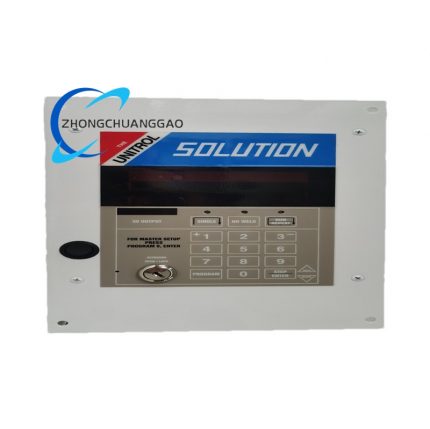
- Local panel human-computer interaction: equipped with digital LED parameter display screen, numeric keypad, fine-tuning rotary encoder for direct wavelength/power parameter setting on front panel without external controller
- Built-in real-time self-diagnosis system: automatically detect internal drive circuit, laser chip temperature and optical output abnormal state, feed back fault code via front digital display for rapid maintenance positioning
- External remote communication interface: support standard serial bus remote parameter configuration, compatible with upper computer automatic test system for batch automated optical testing
- Functional expandability: reserved internal extension slot to install optional polarization maintaining fiber output module (Option P6 variant: 3646HE-P6) according to actual application requirement
5. Performance Parameters (Classified Index)
Optical Performance Index
- Wavelength Tuning Resolution: 0.01nm minimum incremental tuning step
- Output Power Stability: ≤±0.5% power fluctuation within continuous 24-hour fixed ambient operation
- Insertion Loss of Internal Optical Path: ≤0.8dB for built-in collimation and coupling optical assembly
- Polarization Dependent Loss (PDL): ≤0.1dB for standard single-mode output port
Reliability Performance Index
- Rated continuous working lifespan: minimum 80000 hours under specified standard operating environment
- Vibration resistance standard: comply with IEC60068 industrial vibration test specification for laboratory and factory production environment
- Calibration validity period: 12 months per original factory calibration certification standard
6. Material Composition
- Outer Enclosure Shell: Whole-body cold-rolled aluminum alloy with anti-oxidation hard anodizing surface treatment, corrosion-resistant and high thermal conductivity for passive heat dissipation
- Core Light Emitting Medium: InGaAsP compound semiconductor laser epitaxial wafer (indium gallium arsenide phosphide), the core gain medium determining 1540nm central emission wavelength
- Internal Optical Components: Ultra-precision fused silica collimating lens, anti-reflection coated Fabry-Perot resonant cavity glass sheet, single-mode pigtailed fiber with ceramic ferrule end-face polishing
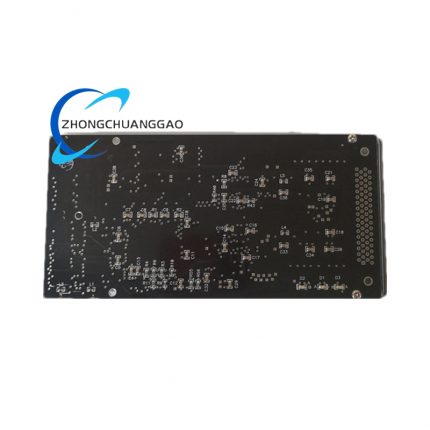
- Electronic Circuit Baseboard: FR-4 high-temperature resistant glass fiber printed circuit board (PCB), military-grade surface mount semiconductor drive chip and precision fixed-resistance components
- Thermal Dissipation Auxiliary Parts: Copper alloy heat sink and high thermal conductivity silicone thermal pad attached between laser chip and aluminum housing
7. Structural Characteristics
- Overall split modular structure: divided into front panel operation module, intermediate electrical drive cavity and rear optical output cavity three independent sealed sub-assemblies, all separated by aluminum partition board to avoid optical path and circuit mutual interference
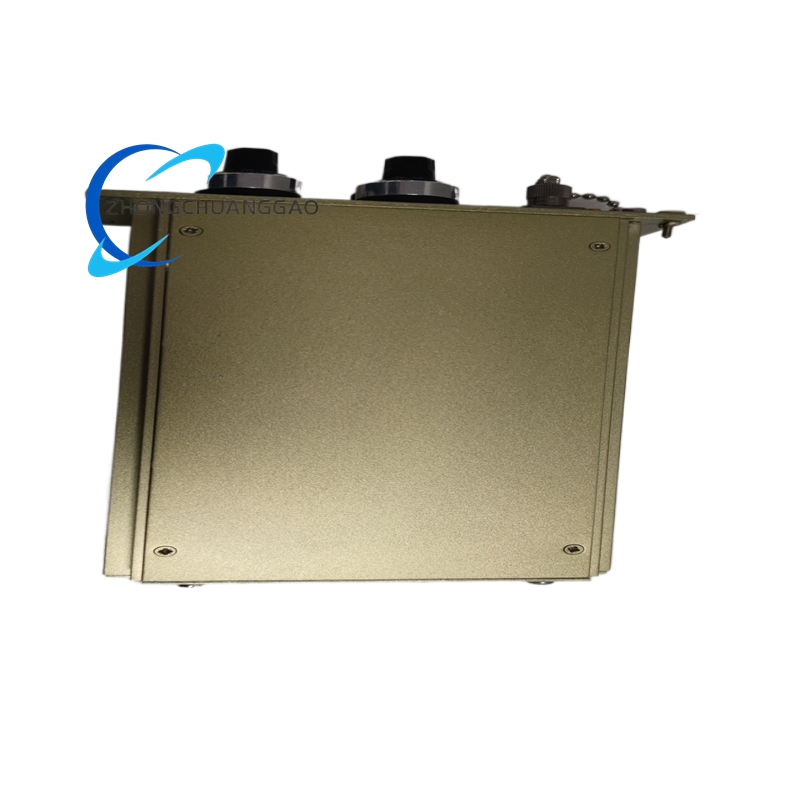
- Front panel layout: upper area digital display window + warning safety laser radiation label, middle numeric input keypad, right side fine-adjustment rotary knob, bottom two optical fiber output interface sockets and power input terminal port
- Internal resonant cavity structure: integrated micro-electro-mechanical (MEMS) tuning component inside laser resonant cavity to realize continuous C-band wavelength mechanical tuning
- Rear chassis structure: standard 19-inch rack card edge connector for power supply and remote communication signal transmission, positioning bayonet lock fixed design for quick plug-in into standard optical test chassis
8. Working Principle
- Electrical Pumping Excitation Stage: Stable regulated +12V DC power is input into internal laser drive circuit, after APC constant-current conversion, forward bias drive current is injected into InGaAsP semiconductor PN junction active layer; electrons and holes complete carrier recombination inside active gain medium to release photon energy via spontaneous emission effect.
- Population Inversion Establishment: Continuous injection of drive current forms population inversion state inside semiconductor active layer, making excited-state carrier quantity exceed ground-state carrier quantity to satisfy laser oscillation precondition.
- Resonant Cavity Optical Amplification: Cleaved crystal end-facets of laser chip plus external coated Fabry-Perot optical sheet compose closed optical resonant cavity; generated photons complete repeated round-trip reflection inside resonant cavity and obtain continuous stimulated emission amplification to form coherent narrow-linewidth laser beam.
- Wavelength Tuning & Output Control: Built-in MEMS tuning element changes resonant cavity effective optical length under digital control signal to realize continuous wavelength shifting within 1520~1570nm range; collimating lens couples amplified laser into single-mode tail fiber for final external optical output, APC circuit real-time adjusts drive current to lock output optical power at preset fixed value.
9. Advantage Highlights
- Ultra-narrow spectral linewidth characteristic effectively reduces optical phase noise, fully match high-speed DWDM coherent optical communication system testing requirement
- Low thermal resistance integral packaging design realizes efficient passive heat dissipation, long-term running parameter drift far below industry common laser source average level
- All core optical components complete NIST traceable factory calibration, measured data has international metrology certification validity for laboratory formal test report compilation
- Compact pluggable modular design saves test equipment cabinet installation space, supports mixed insertion with other Tunics-OM series optical modules inside same chassis
- Low energy consumption optimized circuit design reduces long-term operating power cost and auxiliary cooling equipment configuration requirement
- Built-in comprehensive multi-layer protection mechanism effectively resist overcurrent, overvoltage, static electricity and ambient dust erosion to extend service cycle
10. Applicable Industries
- Optical Communication Industry: DWDM component production testing, optical amplifier EDFA parameter calibration, optical transceiver module factory incoming inspection, fiber optic cable loss & dispersion characteristic measurement
- Optoelectronic Laboratory & Scientific Research: Spectral analysis experiment, coherent laser interference research, new optical material photoelectric characteristic development test
- Precision Optical Sensing Industry: Fiber Bragg Grating (FBG) sensor calibration, distributed optical fiber temperature/strain sensing system debugging
- Medical Optoelectronics Industry: Near-infrared biological spectrum detection equipment calibration, minimally invasive laser medical auxiliary light source parameter verification
- Industrial Precision Measurement Industry: Non-contact laser dimensional inspection equipment calibration, optical interferometer standard light source configuration
11. Model Series Classification
- Parent Product Line: Photonetics Tunics-OM Series Tunable Laser Source
- Same Series Core Model Branches:
- 3646RA00: Wide-range full C-band tunable basic version
- 3646HE Series: Fixed central wavelength customized sub-series (1530nm/1540nm/1550nm three fixed center wavelength subdivisions, target model 3646HE1540 = fixed 1540nm center wavelength specification)
- 3646HE-P6: Optional polarization-maintaining fiber output upgraded variant based on 3646HE base platform
12. Installation Requirements
- Rack Installation Condition: Install into standard 19-inch industrial optical test chassis fixed slot, ensure chassis internal forced air cooling system normal startup to maintain cabinet internal temperature between 22℃~28℃ constant range
- Power Supply Matching Requirement: Connect with certified industrial regulated +12V DC power adapter with ripple coefficient ≤1mV; strictly prohibit parallel connection with high-power inductive load power supply on same power loop
- Optical Fiber Connection Specification: Use standard single-mode ceramic ferrule FC/APC connector fiber to link module output port, keep fiber bending radius larger than 30mm to avoid fiber macrobending loss causing power abnormal drop
- Ambient Installation Environment: Install position avoids direct sunlight irradiation, corrosive gas accumulation and severe mechanical vibration source; relative ambient humidity fixed between 30%~70% non-condensation range
- Grounding Standard: Complete equipment chassis reliable protective grounding via standard grounding terminal to eliminate static damage risk for internal precision semiconductor chip
13. Usage Precautions
- Startup Operation: Complete 30 minutes preheating after power-on before formal optical parameter testing, wait internal temperature control system reach steady state to guarantee output wavelength and power meet calibrated nominal value
- Optical Port Protection: Keep unused output optical port equipped with original dust protection cap at all times to prevent dust particle adhesion on end-face causing coupling loss increment
- Prohibited Operation: Never disassemble module sealed aluminum housing without professional factory maintenance authorization; internal laser chip and optical components are sensitive to dust and mechanical impact
- Storage Specification: When long-term idle storage, place unit inside original sealed moisture-proof carton under 10℃~30℃ dry ambient environment, avoid low-temperature freezing and high-humidity mildew
- Safety Regulation: Front panel laser warning label area marks Class 3B laser radiation level; avoid naked eye direct observation of bare output laser spot to prevent irreversible retinal injury
- Maintenance Cycle: Conduct full optical performance recalibration every 12 months per factory specification; all maintenance operations must adopt factory-matched original spare parts only





Reviews
There are no reviews yet.