Technical Specifications
- Supported Communication Interfaces: Redundant ControlNet, FOUNDATION Fieldbus H1, Modbus RTU RS485, Fiber Ethernet
- Terminal Channel Count: 8 multi-purpose communication signal terminal pairs
- Signal Isolation Rating: 2500 VAC galvanic isolation per communication channel
- Surge Protection Withstand: 40 VDC transient voltage surge suppression
- Terminal Screw Torque Requirement: 0.7 N·m tightening torque
- Supported Wire Gauge: 26 AWG to 16 AWG twisted-pair communication cable
- Operating Temperature Range: -40 °C to +70 °C
- Physical Dimensions: 160 mm × 98 mm × 30 mm
- Net Weight: 0.28 kg
Functional Features
- Independent surge suppression circuit for every communication terminal pair
- Built-in impedance matching resistors for FOUNDATION Fieldbus H1 bus termination
- Galvanic isolation barriers separating controller internal circuits and field communication wiring
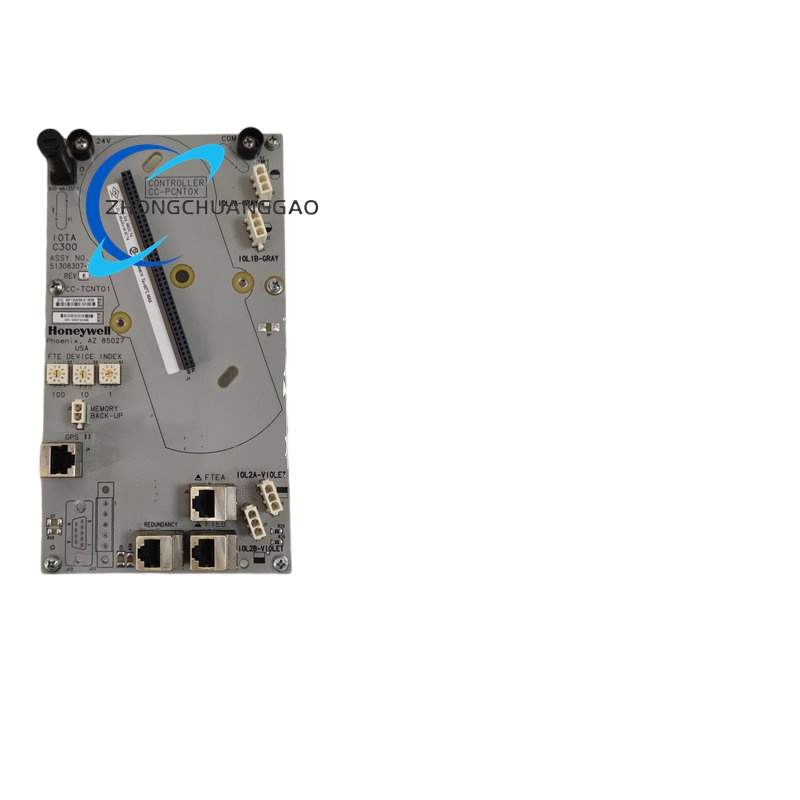
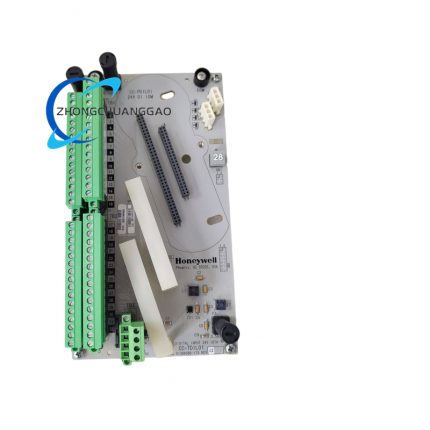
- Front labeled terminal mapping aligned with C300 controller communication channel addressing
- Rear edge connector direct mechanical and electrical mating with C300 controller communication daughter card
- DIN rail mounting bracket pre-installed for cabinet rack fixation
Performance Parameters
- Fieldbus signal transmission bandwidth: 31.25 kbps FOUNDATION Fieldbus H1 standard
- RS485 Modbus maximum baud rate: 115200 bps
- Terminal contact resistance: ≤ 12 mΩ per communication channel pair
- Surge protection response time: <1 ns transient spike suppression
Material Composition
- Chassis Housing: UL94 V-0 flame retardant PA66 plastic
- Terminal Hardware: Gold-plated copper contact blocks, nickel-plated steel fastening screws
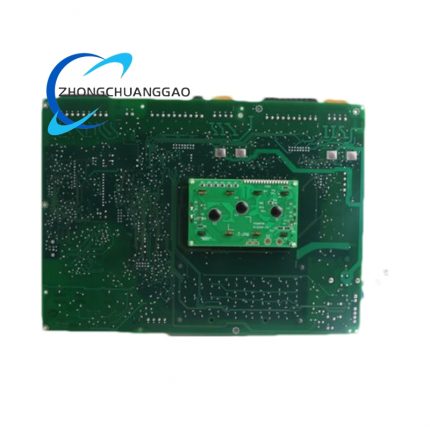
- Internal PCB: FR-4 communication-grade circuit board with conformal moisture-resistant coating
Structural Characteristics
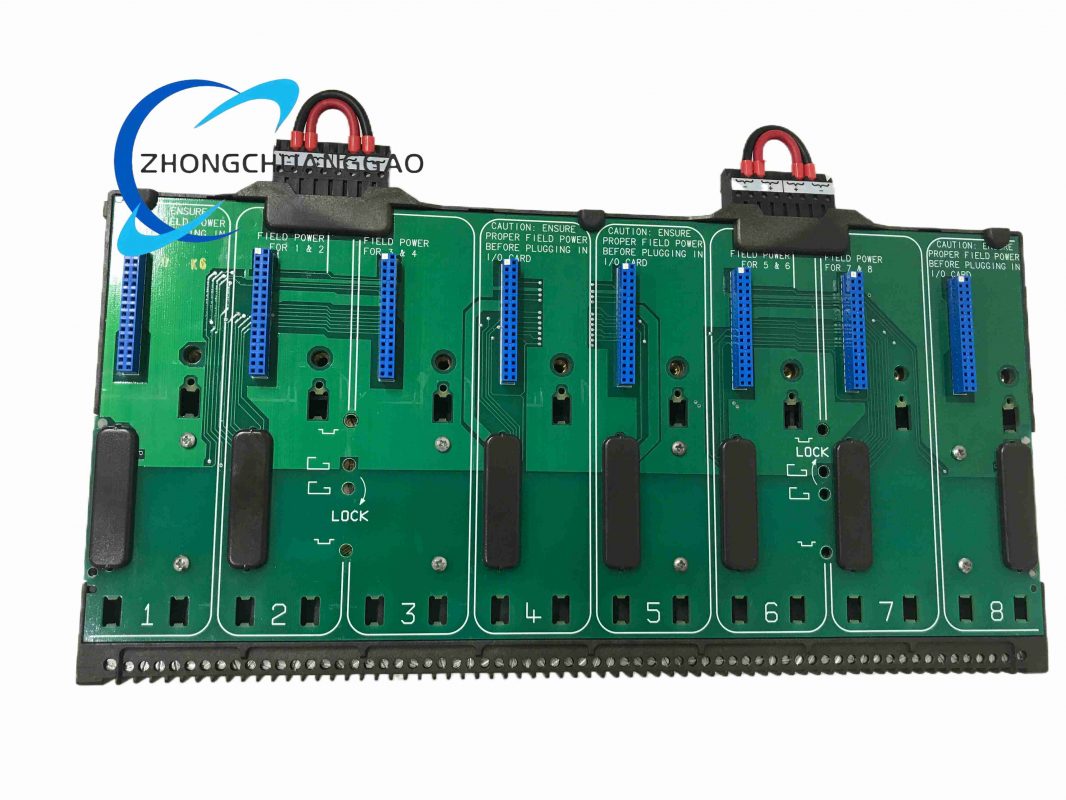
- Standard narrow Series-C IOTA form factor matching IOM module rack height
- Front exposed screw terminal block for field communication cable termination
- Rear single edge connector locking onto C300 controller communication daughter card port
- Integrated DIN rail clip for slide-on rack installation with anti-vibration locking tab
Working Principle
Receives field communication bus signals from external twisted-pair cables via front screw terminals; internal surge suppression circuits filter electrical transients from field wiring; impedance matching and isolation circuits condition communication signals to standard industrial bus voltage levels, then route conditioned signals through rear edge connector to paired C300 controller communication daughter card. Isolation barriers eliminate ground loop interference between controller rack and remote fieldbus instruments.
Advantage Highlights
- All field communication wiring terminates on separate terminal base, controller communication daughter card hot-swappable without cable disconnection
- Integrated fieldbus termination resistors eliminate external bus terminator hardware
- Per-channel surge protection reduces external signal isolator component count
- Standardized terminal labeling minimizes field communication wiring configuration errors
- Unified terminal base for all C300 controller communication interface types reduces spare part inventory
Applicable Industries
All process control industries deploying Honeywell Experion PKS C300 DCS with FOUNDATION Fieldbus or Modbus field instrumentation: petrochemical, oil & gas, power generation, water treatment, mining
Installation Requirements
- Must mate exclusively with C300 controller communication daughter card
- Mount on standard 35 mm DIN rail inside Class 1 industrial control cabinet
- Field communication cables use dedicated shielded twisted-pair instrument cable, single-point shield grounding at CC-TCNT01 earth lug
- Maintain minimum 10 mm horizontal gap between adjacent terminal base units for heat dissipation
- IOTA dedicated earth terminal hardwired to cabinet protective earth bus bar
Usage Precautions
- Do not apply transient voltage exceeding 40 VDC to any communication terminal pair
- Separate high-current power wiring from communication cables connected to CC-TCNT01 terminals
- Activate built-in fieldbus termination resistors only at physical bus cable endpoints to avoid signal reflection distortion
- Do not over-tighten terminal screws beyond specified torque rating to prevent plastic terminal block cracking
- Verify communication bus wiring polarity before controller commissioning to eliminate bus communication failure




-430x430.jpg)
-430x430.jpg)
-430x430.jpg)

Reviews
There are no reviews yet.