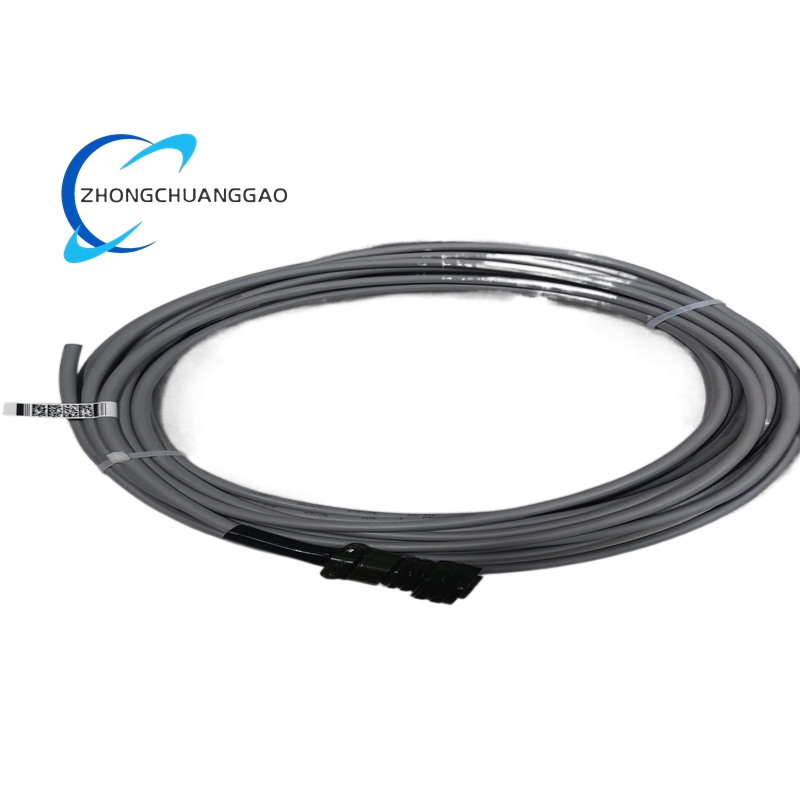
The cable provides a reliable physical barrier against external noise, ensuring signal integrity for sensitive equipment in ABB automation systems and beyond.
Technical Specifications
The specifications below define the electrical and physical parameters typical for this high-grade shielded cable variant:
- Rated Voltage:
- 300/300V (Standard for instrumentation).
- 300/500V (For higher power control loops).
- Conductor:
- Material: High-purity annealed copper or tinned copper (for corrosion resistance).
- Structure: Multi-strand fine wires (Class 5 flexibility per IEC 60228).
- Cross-Section: Typically ranges from 0.12 mm² to 25 mm² (common sizes: 0.5, 0.75, 1.0, 1.5, 2.5 mm²).
- Core Count: 2 to 24 cores (custom configurations available).
- Insulation:
- Material: PVC (Polyvinyl Chloride) or PE (Polyethylene).
- Color Coding: Cores are color-coded or numbered for easy identification.
- Shielding:
- Type: Copper wire braid (braided shield) or aluminum/polyester foil (foil shield), or a combination (braid + foil).
- Coverage Density: Typically 85% to 95% coverage for effective EMI/RFI suppression.
- Drain Wire: Includes a tinned copper drain wire for easy grounding connection.
- Sheath (TPE):
- Material: Thermoplastic Elastomer.
- Advantages over PVC: Superior flexibility (cold resistance down to -40°C), better abrasion resistance, oil resistance, and halogen-free/low-smoke properties in some formulations.
- Color: Usually Black (RAL 9005) or Grey (RAL 7001).
- Electrical Performance:
- Test Voltage: 2000V / 5 min (no breakdown).
- Insulation Resistance: > 20 MΩ·km.
- Capacitance: Low mutual capacitance to minimize signal crosstalk.
- Environmental & Mechanical:
- Operating Temperature: -40°C to +70°C (TPE allows lower cold bend).
- Min. Bending Radius: 6x to 10x overall diameter (flexible).
- Flame Retardancy: IEC 60332-1 (self-extinguishing).
Functional Features
- Superior EMI/RFI Shielding:
- The metallic shield (braid/foil) effectively blocks external electromagnetic interference (from motors, VFDs, power lines) and prevents internal signals from radiating out, crucial for data security and signal clarity.
- Enhanced Flexibility & Durability (TPE Advantage):
- The TPE sheath remains flexible in sub-zero temperatures and resists cracking, oil, and chemicals better than standard PVC, making it ideal for moving parts (cable chains/drag chains) and outdoor use.
- Signal Integrity:
- Designed for low-attenuation signal transmission, suitable for analog signals (4-20mA), digital bus systems (RS485, Modbus), and audio frequencies.
- Easy Installation:
- The flexible construction allows for easy routing in tight spaces. The drain wire simplifies the termination and grounding process of the shield.
- Safety & Compliance:
- Often complies with CCC (China Compulsory Certification), CE, and RoHS standards. TPE variants are often preferred for “Green Building” standards due to lower toxic fume emission in fire scenarios compared to PVC.
Application Scenarios
The ABB RVVP-TPE is versatile and deployed in scenarios requiring high reliability and signal purity:
- Industrial Automation & Robotics:
- Connecting sensors, encoders, and servo motors to PLCs and drives.
- Wiring for robotic arms and moving machinery (benefiting from TPE flexibility in cable chains).
- Process Control & Instrumentation:
- Signal transmission for pressure, temperature, and flow transmitters.
- Connection to Distributed Control Systems (DCS) and SCADA interfaces.
- Building Automation:
- Fire alarm systems, security cameras (CCTV), and access control systems.
- HVAC control loops and BMS (Building Management System) networking.
- Audio & Communication:
- Professional audio systems (microphone cables, speaker lines in noisy environments).
- Data transmission lines in industrial Ethernet networks.
- Medical & Laboratory:
- Connection of sensitive diagnostic equipment where electrical noise must be minimized.
- Renewable Energy:
- Monitoring and control cabling for solar inverters and wind turbine pitch systems.
Differentiation from Standard RVVP
While standard RVVP uses a PVC sheath, the RVVP-TPE variant specifically uses Thermoplastic Elastomer. This distinction is critical for:
- Cold Environments: TPE remains flexible at -40°C, whereas PVC becomes brittle.
- Mechanical Stress: TPE has higher tear strength and abrasion resistance.
- Chemical Resistance: TPE offers better resistance to oils, greases, and solvents.
- Environmental Impact: TPE is often halogen-free and recyclable, aligning with modern sustainability goals.





Reviews
There are no reviews yet.