Technical & Performance Specifications
- Core Control Capacity: 16 independent heat/cool PID control loops
- Sensor Input Types: Thermocouple (all standard types), RTD Pt100/Pt1000, linear DC voltage, linear DC current, pulse frequency
- Input Measurement Accuracy: ±0.001°C for Type K thermocouple; total error ≤0.05% full scale
- Temperature Measurement Range: -268°C ~ 1371°C (thermocouple dependent)
- Noise Rejection Index: 120 dB at 60 Hz industrial frequency
- Temperature Coefficient: 40 ppm/°C
- Digital Output Count: 34 configurable logic outputs for SSR driving, alarm interlock
- Communication Interfaces: EIA/TIA-232, EIA/TIA-485 serial bus
- Built-in Storage: 8 complete process job recipes for one-touch program switching
- Isolation Rating: 4000 VRMS input-output galvanic isolation
- Physical Dimensions: 1/8 DIN standard industrial enclosure
- Operating Ambient Temperature: -20°C ~ +80°C (forced air cooling required at full 16-loop load)
- Protection Rating: IP67 front panel; IP20 rear wiring compartment
- Certifications: UL, cUL, CE, RoHS compliant
Function Features
- Full auto-tune PID algorithm, eliminates manual parameter calibration
- Built-in ramp/soak batch temperature sequencing for thermal forming, curing processes
- Advanced control logic support: cascade control, ratio control, differential temperature regulation, remote analog setpoint tracking
- Real-time sensor fault detection: open-circuit, short-circuit, reversed polarity sensor diagnostic
- Independent high/low process deviation alarm for each individual loop
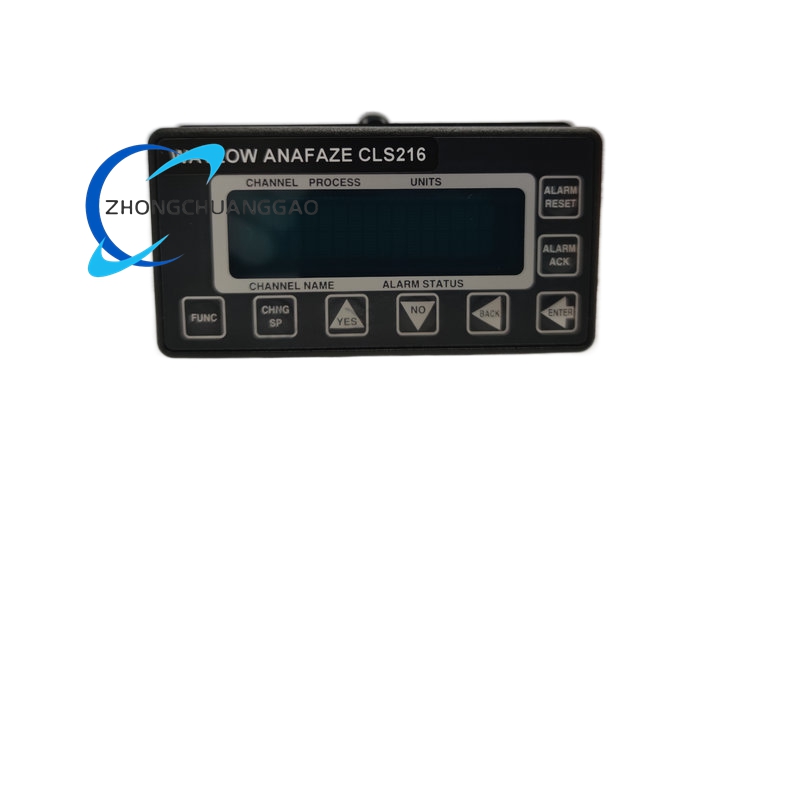
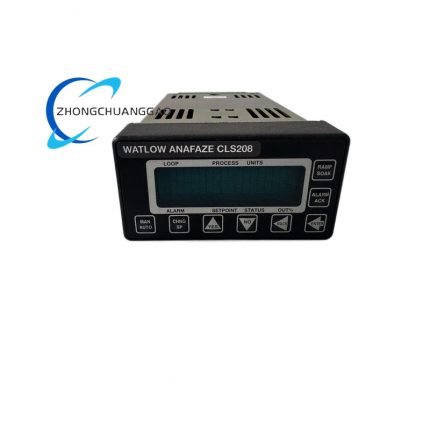
- Menu-driven full-text LCD display with multi-language operator interface
- Standalone offline operation and host computer data logging dual operation modes
- Zero-cross or random phase SSR trigger output configurable per channel
Working Principle
Multi-channel analog front-end converts low-level sensor signals to standardized digital values via high-resolution ADC. Onboard microcontroller executes adaptive PID calculations for each loop independently, compares measured process variable against user setpoint, outputs pulse-width modulated logic signals to drive solid-state relays for heating/cooling load regulation. Serial communication modules transmit real-time loop data and receive remote setpoint commands to link PLC, SCADA or industrial PCs.
Material & Structural Composition
- Front housing: High-impact flame-retardant ABS plastic with scratch-resistant transparent protective cover
- Internal chassis: Cold-rolled steel anti-electromagnetic shielding frame
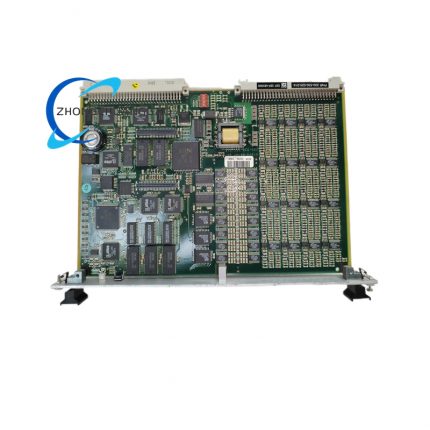
- PCB substrate: FR4 high-temperature resistant circuit board with gold-plated signal contacts
- Terminal blocks: Tin-plated copper screw terminals with locking wire retention
Advantage Highlights
- 16-loop integration reduces cabinet space occupancy by 70% vs single-loop discrete controllers
- Fewer discrete hardware components lower long-term equipment failure rate
- Universal multi-sensor input eliminates separate signal transmitters
- High galvanic isolation eliminates ground loop interference in multi-loop systems
- Pre-stored job recipes enable rapid production line changeover without reconfiguring PID parameters
- Wide industrial temperature operating range adapts to unconditioned factory control cabinets
Applicable Industries
Automotive thermal forming, plastic injection molding, semiconductor packaging curing, food processing ovens, aerospace composite curing, battery thermal cycling test equipment, metal heat treatment furnaces
Installation Requirements
- Mounting standard: 35 mm EN 60715 DIN rail vertical mounting inside sealed industrial control cabinet
- Minimum cabinet ventilation clearance: 50 mm top and bottom air gap for heat dissipation
- Wiring specification: Max 2.5 mm² solid copper wire for power terminals; max 1.5 mm² shielded twisted pair for sensor wiring
- Grounding: Separate protective earth wire connected to chassis ground terminal, resistance ≤0.1 Ω
Operation & Maintenance Notes
- Mandatory forced air cabinet cooling when operating all 16 loops at full power output
- Shielded sensor cable metal shielding grounded at controller side only, single-point grounding to avoid interference
- Calibration verification cycle: Every 12 months per ISO 9001 process control standards
- Do not operate unit above +80°C ambient temperature; overheating triggers permanent thermal protection lockout
- Isolate all sensor wiring from high-current power cabling with minimum 10 cm separation distance





Reviews
There are no reviews yet.