
Technical Specifications:
- Number of Channels: 16 single-ended or 8 differential analog inputs
- Input Signal Types: 4-20mA, 0-20mA, 0-10V DC, 1-5V DC
- Input Resolution: 16-bit A/D converter (65,536 counts)
- Sampling Rate: 10 samples per second per channel (aggregate)
- Input Impedance (Voltage): Greater than 1 MΩ
- Input Impedance (Current): 250Ω burden resistor (user-selectable: 50Ω, 100Ω, 250Ω, 500Ω)
- Accuracy: ±0.1% of full scale (typical)
- Linearity: ±0.05% of full scale
- Common Mode Rejection: 120dB minimum (differential mode)
- Channel-to-Channel Isolation: 500V RMS
- Channel-to-Backplane Isolation: 500V RMS
Functional Features:
- Software-configurable input range per channel via I/A Series configurator
- Per-channel diagnostics: Open circuit detection, short circuit detection, out-of-range alarm
- Cold Junction Compensation (CJC): Built-in for thermocouple inputs (types J, K, T, E, N, R, S, B)
- Burnout current detection for 4-20mA inputs (21mA and 23mA test)
- Per-channel filtering: User-selectable 50Hz or 60Hz notch filter
- Per-channel scaling (engineering units conversion)
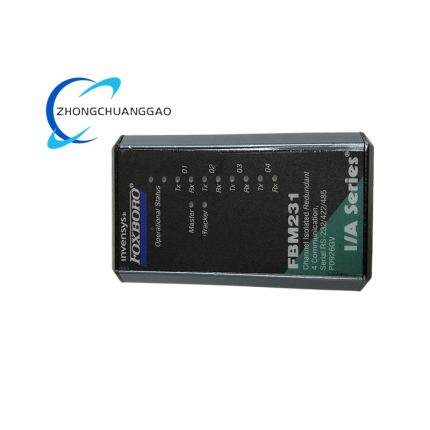
- LED indicators: Power, Run, Fault per channel group (4 channels per group)
Performance Parameters:
- Operating Temperature: 0°C to 60°C (32°F to 140°F)
- Storage Temperature: -40°C to 85°C (-40°F to 185°F)
- Relative Humidity: 5% to 95% non-condensing
- MTBF: Greater than 200,000 hours
- Power Consumption: 2.5W from backplane
- Isolation Voltage (Channel-to-Channel): 500V RMS
- Isolation Voltage (Channel-to-Ground): 500V RMS
Material Composition:
- Chassis: Galvanized steel with epoxy powder coating
- PCB: FR-4 glass epoxy, conformal coated
- Terminals: Phoenix-style screw terminals, tin-plated copper alloy
- A/D Converter IC: Analog Devices AD7714 or equivalent (16-bit sigma-delta)
- Isolation: Analog isolation amplifiers (Analog Devices AD202 or equivalent)
Structural Features:
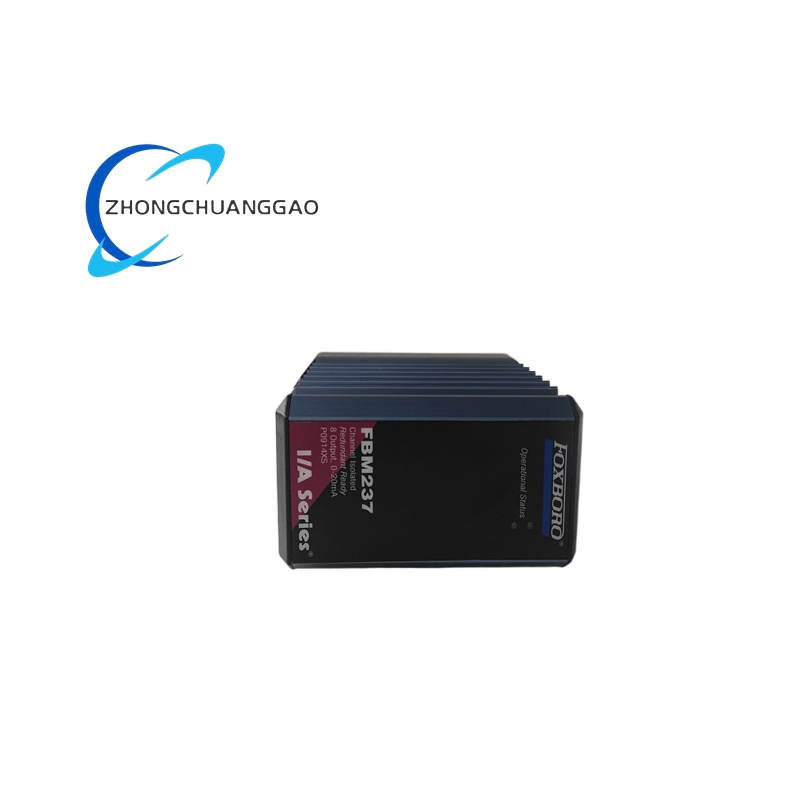
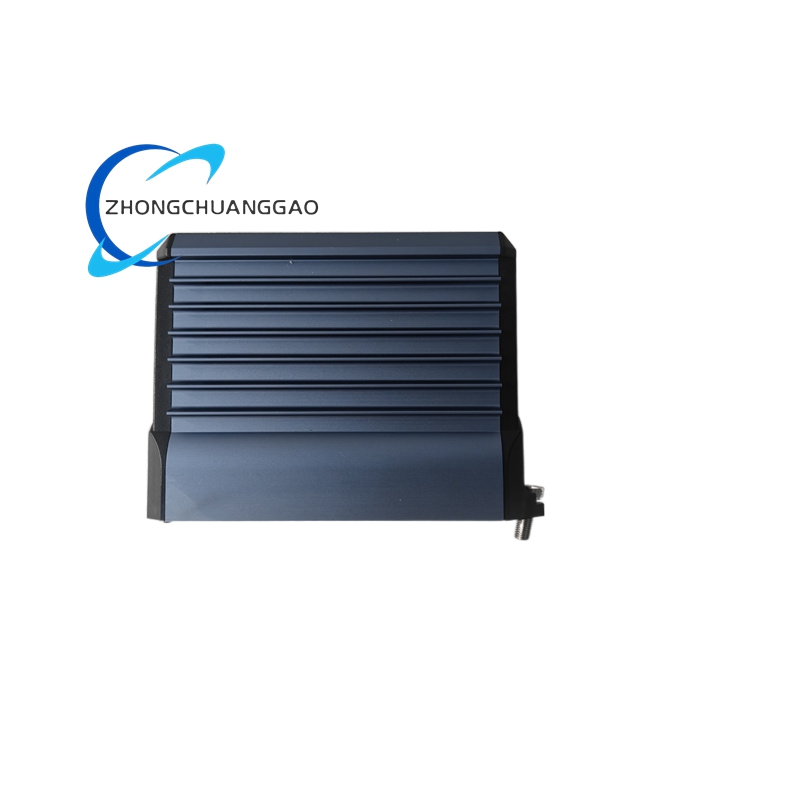
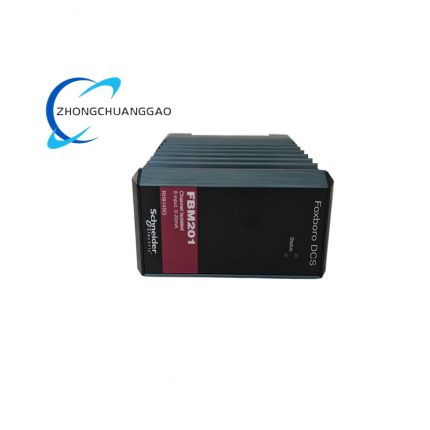
- Form Factor: Standard I/A Series module, single-width
- Mounting: DIN rail or chassis mounting via backplane connector
- Dimensions (W x H x D): 25.4mm x 160mm x 120mm (approximate)
- Weight: Approximately 0.40 kg (0.88 lb)
Working Principle:
The FBM237 uses a sigma-delta A/D conversion architecture. Each channel has a dedicated multiplexer that routes the selected input to a 16-bit sigma-delta A/D converter. The analog input signal is first conditioned by an instrumentation amplifier with programmable gain, then converted to a digital value. Optical isolation barriers separate each channel from the backplane and from each other, preventing ground loops and cross-talk. The digital data is transferred to the I/A Series controller via the backplane I/O bus.
Advantages & Highlights:
- 16-bit resolution provides superior measurement accuracy compared to 12-bit modules
- Per-channel diagnostics enable early fault detection and predictive maintenance
- Software configurability eliminates need for hardware jumpers or DIP switches
- High common-mode rejection ensures accuracy in electrically noisy environments
Applicable Industries:
- Oil and Gas (wellhead monitoring, pipeline SCADA)
- Chemical and Petrochemical Process Control
- Power Generation (boiler control, turbine monitoring)
- Pharmaceutical (batch process monitoring)
- Pulp and Paper
- Water and Wastewater Treatment
Installation Requirements:
- Use shielded twisted-pair cable for all analog signals
- Ground shield at controller end only (single-point grounding)
- Do not run analog cables parallel to power cables; maintain minimum 300mm separation
- Verify input range settings in configuration software before connecting transmitters
- Connect 4-20mA transmitters in series loop configuration (2-wire)
Usage Precautions:
- Do not apply voltage inputs to current input terminals (will damage module)
- Do not exceed 30V DC on any input channel
- Enable burnout detection to identify wire breaks promptly
- Calibrate per-channel scaling after installation for accurate engineering units
- Replace fuse (if applicable) with exact Foxboro-specified rating only
Reviews
There are no reviews yet.